17 September 2026
AI Made Building Cheap. It Did Not Make Finding the Right Solution Easy.
Why faster prototyping makes research more important, not less.
There is a growing argument that AI has changed product development so fundamentally that traditional research matters less. If we can build a functioning prototype in hours, why spend weeks understanding the problem? Just build something, put it in front of people, validate it, change it and repeat.
I agree with half of that argument.
Validation has become dramatically more valuable because the cost of making something testable has collapsed. We should absolutely take advantage of that.
But I think the argument misunderstands why we did research in the first place.
The cost was never just the cost of building.
The difficult part of product development is finding the right solution to the right problem among an enormous number of things you could possibly make.
Cheap building does not solve that.
It just gives you more bullets.
And sometimes the current approach starts looking like emptying a magazine of copper bullets from the hip and hoping something hits, rather than spending enough time understanding the target to take one deliberate shot.
Research is what helps you aim.
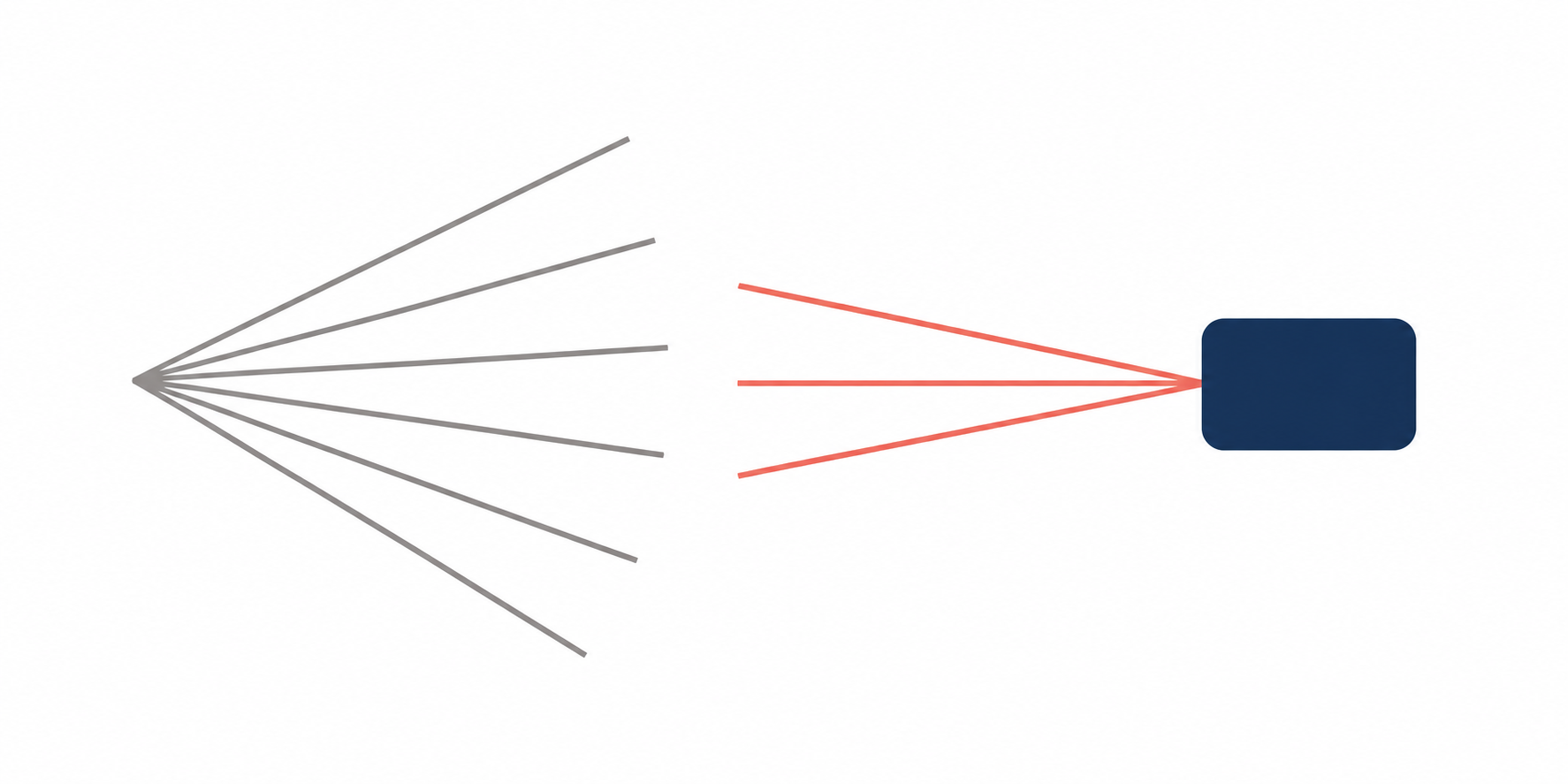
AI gives us more bullets. Research helps us understand where to aim.
Research is not asking people what they want
There is a persistent caricature of user research where we supposedly go out, ask users what they want and then build whatever they tell us.
That is not research.
Users do not need to invent the solution for us. They often cannot. The old "faster horses" cliché is useful here. People usually describe needs from inside the world they already know.
The job is to understand that world well enough to see possibilities they cannot necessarily articulate themselves.
You observe how people work. Where they hesitate. What they ignore. Which workarounds they have invented. What they repeatedly misunderstand. What they keep in spreadsheets because the system does not support them. What they write on Post-its. What they copy into another application. Where they stop following the official process altogether.
And importantly, you look at what people do, not only what they say.
Sometimes the most useful finding is the contradiction between the two.
Research is not feature voting
Good research does not ask users to design the product for us. It studies behavior, context, friction, workarounds, goals and constraints deeply enough that the team can see better opportunities than the users themselves would necessarily be able to propose.
Sometimes the hardest research skill is shutting up
This kind of research requires a particular kind of curiosity, and it is much harder than it looks.
Very few people are actually comfortable observing another person without constantly interfering.
Silence is awkward, so we fill it. We explain things. Ask another question. Demonstrate that we understand. Suggest something. Tell the person what we are interested in.
And every time we do that, we risk changing what we are observing.
If I ask, "Is this part difficult?", I have already introduced the idea that it might be difficult. If I explain what I think the problem is, I have given the participant a framework they did not previously have. If I keep talking, I may end up researching my own assumptions rather than their behavior.
Sometimes good research is simply being capable of sitting there and watching.
Then, when you finally ask something, asking the stupid question rather than demonstrating how clever you are.
"Why did you do that?"
"Why did you open that other application?"
"What happens if you don't do this?"
"What are you looking for?"
Those questions are often far more useful than asking someone whether they would use a feature.
Sometimes the most valuable research technique is being able to shut up long enough to notice what is actually happening.
The low-hanging fruit problem
When you do not understand the problem deeply enough, you almost always find something you can improve.
There is always low-hanging fruit.
A confusing label. An unnecessary click. A missing shortcut. A workflow that could be made slightly faster. A button in the wrong place.
None of those things are necessarily bad improvements.
But they can create the illusion that you have discovered the opportunity.
You have not necessarily.
You may simply have made the existing haystack slightly easier to navigate.
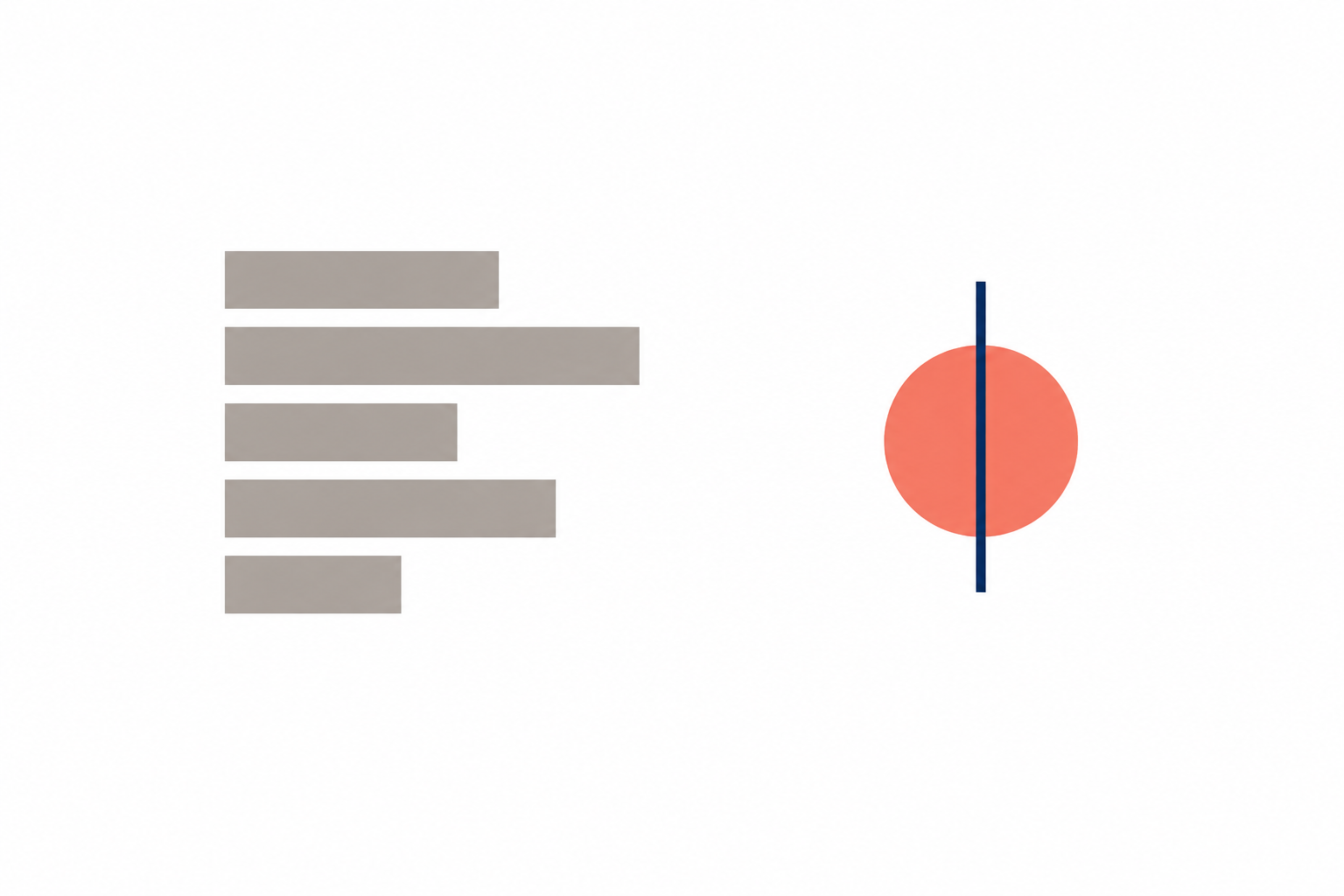
This is one of the metaphors I keep returning to with digital products. Too many experiences are haystacks. More pages. More options. More features. More navigation. More explanations. Every individual part can be justified, and you can probably usability-test most of it successfully.
But the really good product is often the one that does the harder work first.
It finds the needle.
And then it serves that needle to the user on a silver platter.
That requires more than asking whether somebody can complete a task. It requires understanding what they are actually trying to accomplish deeply enough that you can remove everything they should never have needed to deal with in the first place.
Prototypes answer different questions
This is where I think "just prototype and validate" gets dangerous.
A prototype is brilliant for answering questions about a solution.
Can people understand it? Can they use it? Does the proposition make sense? Does one interaction perform better than another? Does the concept create the behavior we expected?
Those are important questions.
But they are downstream questions.
Research can ask something more fundamental:
Should we be solving this particular thing at all?
There may be twenty plausible solutions to the problem you have chosen. AI can now produce all twenty astonishingly quickly.
But what if the interesting opportunity was somewhere else?
What if the problem itself was poorly framed?
What if the user behavior you thought you understood was actually caused by something completely different?
What if you could remove the need for the workflow instead of making the workflow easier?
No amount of rapid prototyping automatically answers those questions.
You can become incredibly efficient at optimizing the wrong territory.
You can validate ten perfectly reasonable solutions and still completely miss the better problem.
The prototype changes the conversation
There is another problem with prototyping too early.
A prototype is not neutral.
The moment an idea becomes tangible, it starts changing how everybody thinks about the problem.
Before the prototype exists, the conversation can still be broad. What is happening? Why are people doing this? Where is the real friction? What else might explain the behavior? Is this even where the opportunity sits?
Then someone walks into the room with something polished and clickable.
Now the conversation becomes:
"What do we think about this?"
That is anchoring.
The first tangible solution becomes the reference point.
Then confirmation bias starts helping us find reasons why the idea is good. Design fixation keeps later ideas close to the original concept. If we have built it ourselves, endowment effect and escalation of commitment make it harder to throw away.
This is where "kill your darlings" becomes much harder than it sounds.
The idea is no longer just an idea.
It works.
It has a name.
You showed it to someone.
Maybe they praised it.
Perhaps leadership has already seen it.
Now throwing it away feels like losing something.
AI can turn one person's assumption into something that looks like evidence
AI makes another bias especially visible: false consensus.
Someone spends three evenings making something they personally would love to use. They bring it into work the next morning. It functions. It looks convincing. They can imagine exactly why it is useful.
And suddenly we hear:
"People would love this."
Where did "people" come from?
There may have been no research at all.
The actual evidence might simply be:
I would use this.
That is not necessarily a user need.
It is a personal preference that has become tangible.
False consensus makes it easy to assume other people think, behave and want the same things we do. And once that assumption has become a polished prototype, it gains a credibility it has not necessarily earned.
AI has dramatically reduced the cost of turning a personal assumption into a convincing product. It has not reduced the need to establish whether that assumption represents anybody besides yourself.
Five prototypes can still be one idea
A common response is that AI allows us to explore much more broadly. We can create five prototypes instead of one.
True.
But five prototypes are not necessarily five different ideas.
They can easily be five variations around the same anchor.
Different navigation. Different layout. Different interaction. Different wording.
Still the same assumption about what the problem is.
Still the same basic model of the user.
Still the same solution territory.
That can create the appearance of exploration without actually moving very far.
The difficult question remains:
Did we identify the right problem in the first place?
Or was there a much larger opportunity somewhere else that nobody investigated because a plausible solution arrived too early?
More variation is not necessarily more discovery
AI can dramatically expand the number of solutions we can produce. But if all of those solutions originate from the same assumption, we are exploring variations inside one frame rather than challenging the frame itself.
Research and validation are not competing
This is why I do not think this should become a fight between research and rapid prototyping.
They do different jobs.
Research helps us understand where to look. Prototyping helps us explore what we might build there. Validation helps us understand whether a particular solution survives contact with reality.
AI makes the latter two dramatically cheaper.
Good.
Use it.
Make more things. Test more assumptions. Throw more prototypes away. Learn faster.
But do not confuse the ability to generate solutions with the ability to identify which problems deserve solutions.
That part did not disappear.
If anything, it becomes more important when building becomes almost effortless.
Because the danger is no longer that we cannot afford to build enough.
The danger is that we can afford to build far too much.
And if we are not careful, all we will do is manufacture haystacks faster.
The future of product development is not choosing between research and rapid validation. It is using research to find the needle, then using AI to test how best to serve it on a silver platter.
5 views